
Comparison
Is a dual-fuel heat pump worth it in Colorado?

Grant Gunnison
Founder & CEO, Zero Homes
8 minute read
10/27/2026
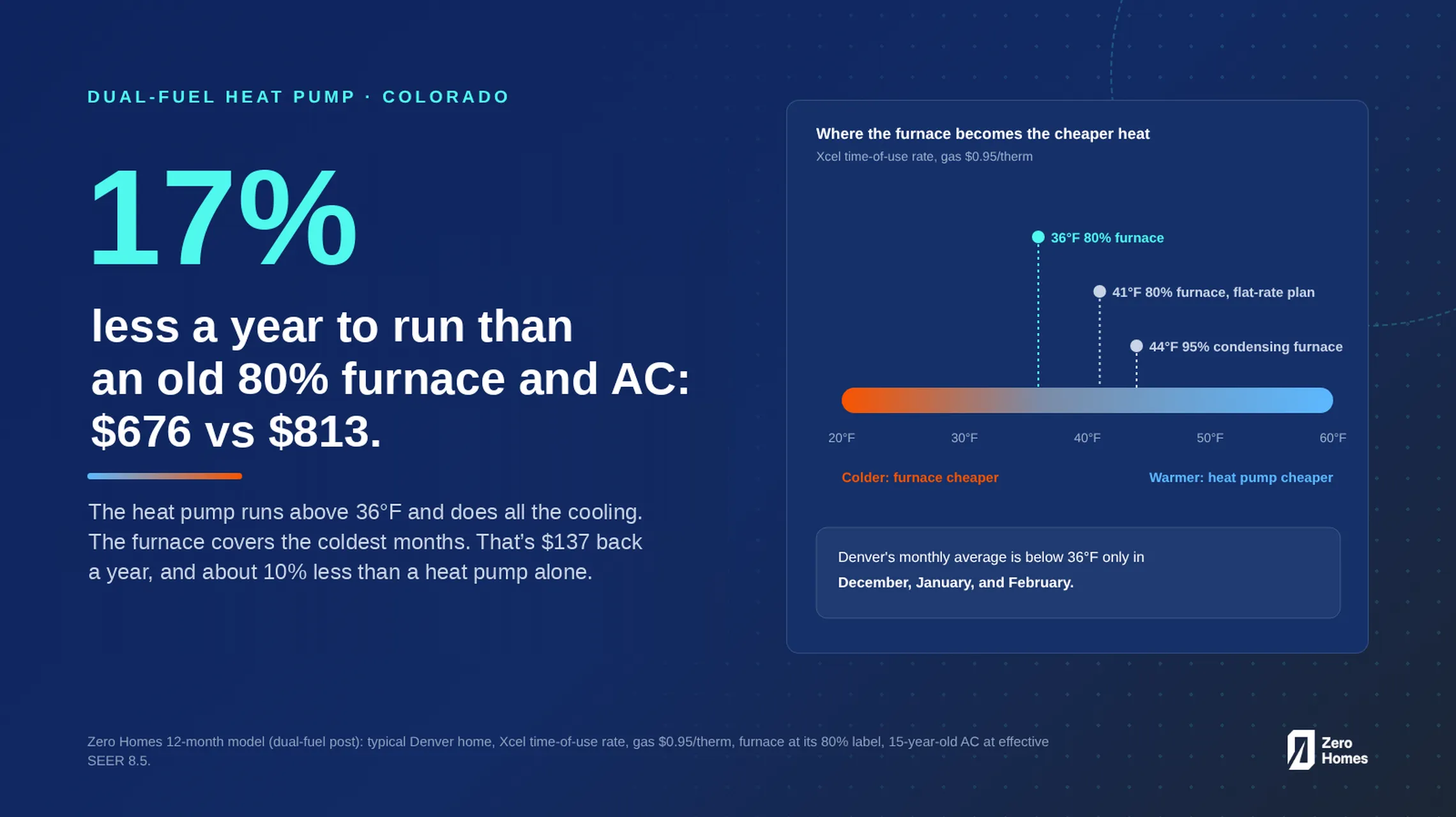
Is a dual-fuel heat pump worth it in Colorado? It's worth it when you have a gas furnace in good shape you'd rather not retire, or a mountain home that sees -20°F nights. A dual-fuel system pairs a cold-climate heat pump with that furnace on one thermostat: the heat pump heats and cools most of the year, and the furnace takes over only in the coldest weeks. In Denver on Xcel Energy's default rate, that setup runs about $140 a year (about 17%) less than keeping an 80% furnace and an aging air conditioner.
The bigger point is that both heat pump options win. A cold-climate heat pump on its own also beats the furnace and air conditioner over 12 months, by about $65 a year (about 8%), and it gets you off gas entirely. Dual fuel adds about $70 more in savings (about 10% below the heat pump alone) by letting the furnace carry December through February. If your furnace is near the end of its life, go heat pump alone. If it still has years left, dual fuel puts it to work.
Key takeaways
Dual fuel means two heat sources and one thermostat. The heat pump handles all cooling and most heating; the furnace runs only below a switchover temperature.
A cold-climate heat pump keeps a Front Range home warm on its own, down to -13°F or lower. On the Front Range the furnace is a cost choice, not a comfort requirement.
Over 12 months in Denver: about $813 for an 80% furnace and old AC, $748 for a heat pump alone (about 8% less), $676 for dual fuel (about 17% less). Both heat pump setups come out ahead.
Most of the savings come in summer, when the heat pump replaces a 15-year-old air conditioner and cools on about half the electricity.
Dual fuel makes sense with a furnace under about 10 years old, or in the mountains. Heat pump alone makes sense with an old furnace or when getting off gas is the goal.
Will a heat pump keep my house warm, or do I need a furnace as backup?
On the Front Range, a cold-climate heat pump keeps the house warm without a furnace. Cold-climate models keep producing heat down to -13°F or lower, and the county design temperatures they're sized to are 0°F to 7°F. In the DOE's field validation, 22 homes ran through winters down to -15°F with little help from backup heat. The field data is in do heat pumps work in cold weather?
So backup is a choice, not a requirement. A dual-fuel system is that choice made with a furnace you already own. One thermostat watches the outdoor temperature and hands off between the two at a switchover point. The heat pump carries all the cooling, all the shoulder-season heating, and most winter days. The furnace runs on the coldest stretch and sits idle otherwise.
The one place backup is part of the design rather than a preference is the mountains. Homes above about 8,000 feet that regularly see -20°F nights are where a heat pump's capacity is most reduced, and gas or a sized electric backup covers those hours. What separates a true cold-climate unit from a standard one is in what qualifies as a cold climate heat pump.
Which setup costs the least to run over 12 months?
Dual fuel, then the heat pump alone, and both beat keeping a furnace and an old air conditioner. Here's a typical Front Range home three ways on Xcel's time-of-use rate.
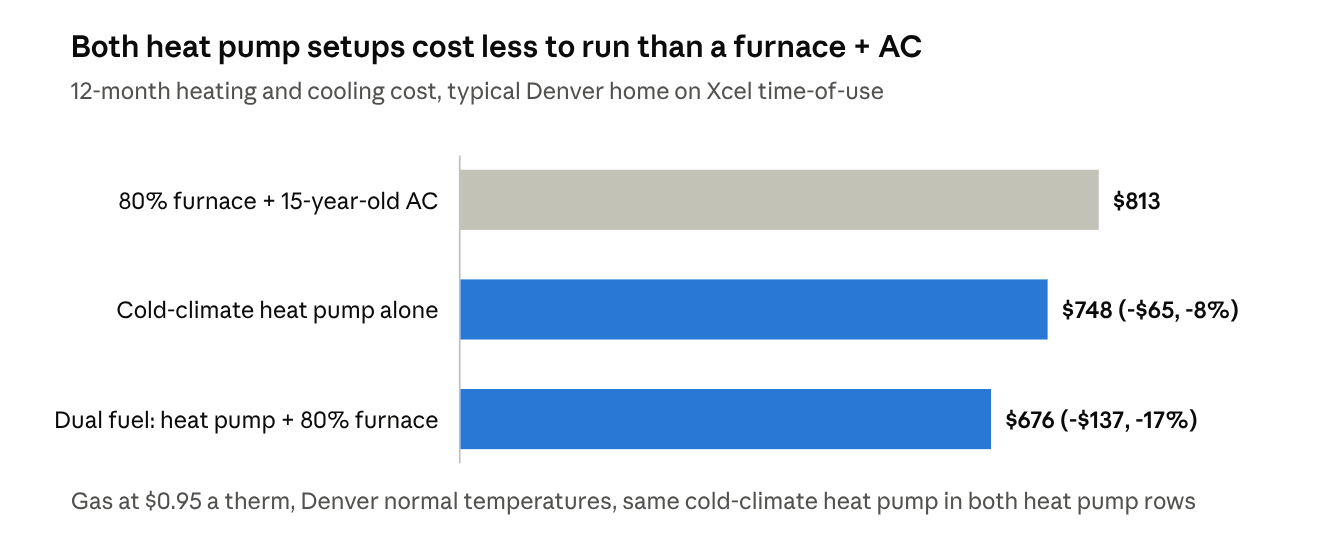
Zero Homes model: Denver normal monthly temperatures, Xcel time-of-use electricity, $0.95/therm gas.
The chart below shows where the savings come from. In December through February, dual fuel runs the same furnace you have now, so the cost matches. The other nine months, the heat pump does the work, and the biggest gap is summer: a 15-year-old air conditioner is the least efficient appliance in most Colorado homes, and the heat pump replaces it.
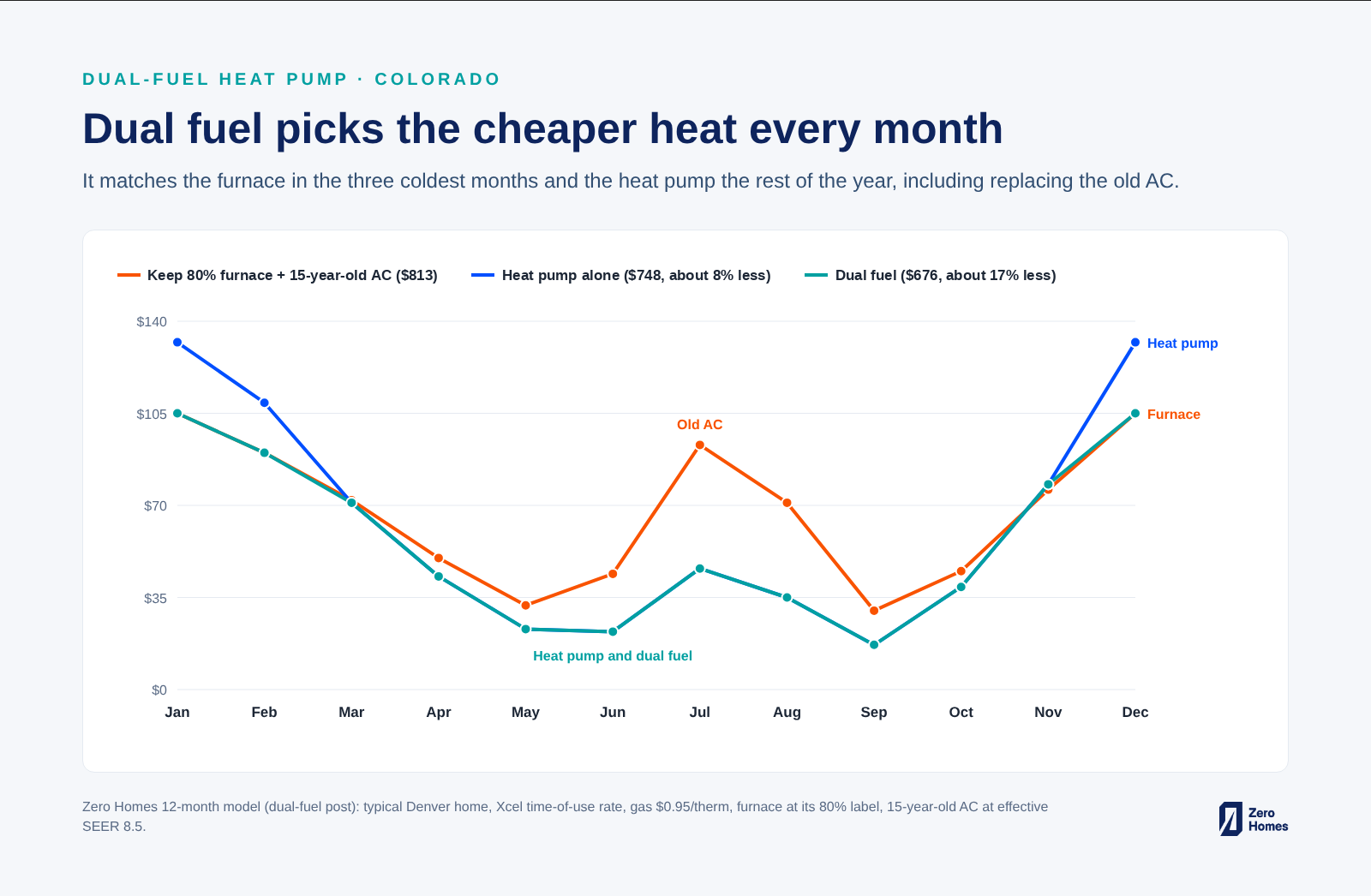
The heat pump alone matches the dual-fuel bars every month except December through February, when it runs about $132, $109, and $132. That's the whole $70 (about 10%) difference between the two heat pump options. The model behind these numbers, including an older 72% furnace that widens the gap to about $130 (about 15%) for the heat pump alone, is in heat pump vs furnace: what each costs to run in Colorado.
Is keeping my furnace worth it?
It depends on the furnace. Pairing a heat pump with a furnace that still has years left costs less upfront than replacing both, and the furnace then earns its keep as a low-cost winter backup. Pairing one with a furnace that's about to fail means paying to connect equipment you'll replace soon.
| Your situation | Best fit |
|---|---|
| Furnace under about 10 years, no service history | Dual fuel |
| Mountain home with regular -20°F nights | Dual fuel or sized backup |
| Furnace 15+ years old or needing repairs | Heat pump alone |
| You want off gas | Heat pump alone |
| You want a safety net while you get used to it | Dual fuel |
Plenty of homeowners who start with dual fuel find the furnace runs a handful of nights a year and go fully electric at the next replacement. Either way, the heat pump is doing most of the work from day one.
What switchover temperature should I set?
The cost-based switchover is where the heat pump's cost per unit of heat crosses the furnace's. On Xcel's time-of-use rate, a heat pump pays a blended winter price of about $0.128 per kWh, and gas is about $0.95 a therm, so electricity costs about 4x gas per unit of energy. The furnace becomes cheaper when the heat pump's COP (coefficient of performance, heat delivered per unit of electricity) drops below 4 times the furnace's efficiency. The full curve is in heat pump COP by temperature.
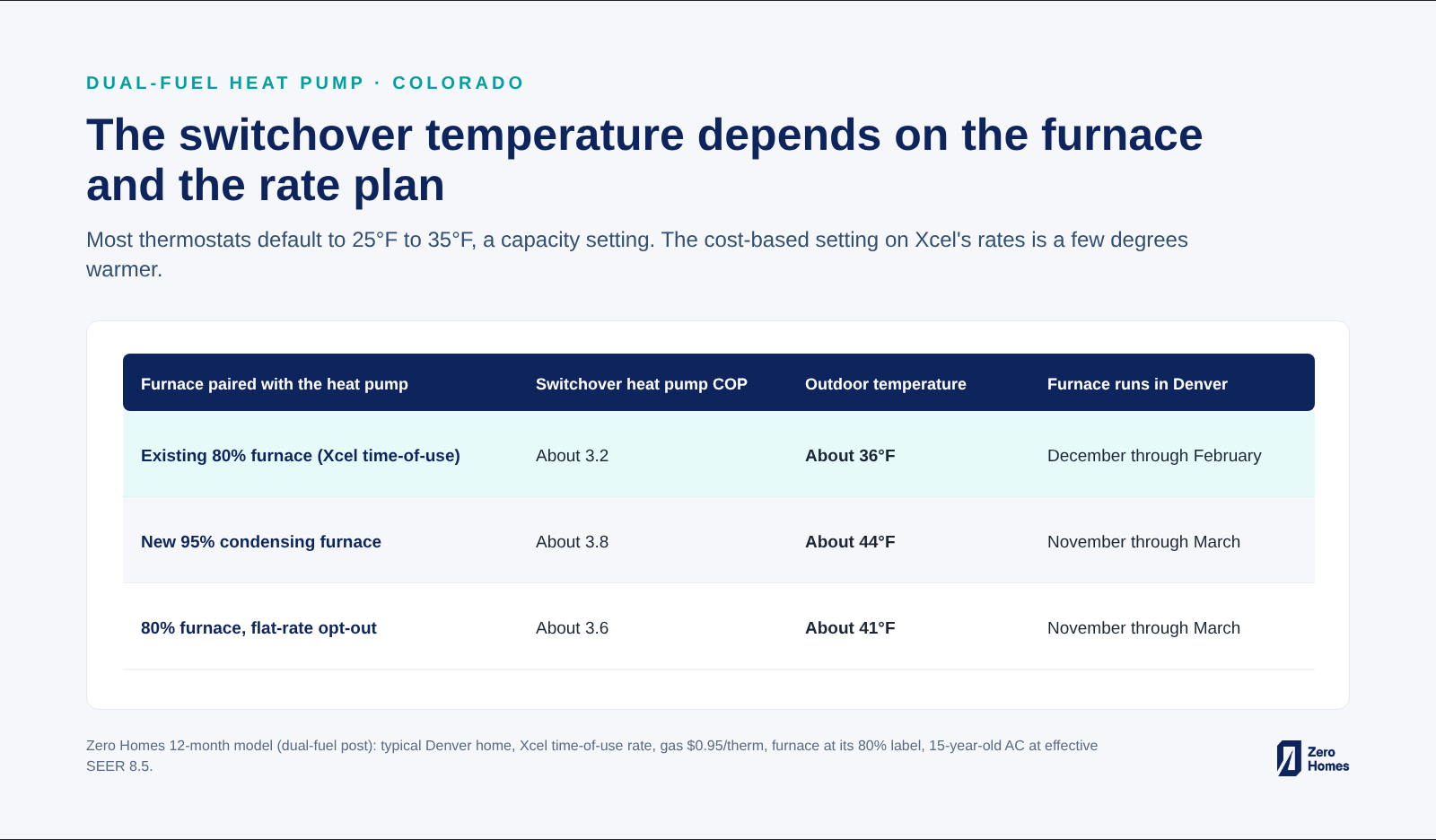
Most dual-fuel thermostats default to 25°F to 35°F, a capacity-based setting rather than a cost-based one. Set it lower if you'd rather burn less gas; a cold-climate heat pump keeps the house warm either way.
How do I know I'm getting the best value?
The best value is the whole offer, not the lowest line item. Start with how each option compares on running cost, since the setup you choose matters more than small differences in equipment price.
| Dual-fuel setup | vs. furnace + AC | vs. heat pump alone |
|---|---|---|
| Existing 80% furnace | About $140 ahead (17%) | About $70 ahead (10%) |
| New 95% furnace | About $185 ahead (23%) | About $120 ahead (16%) |
| Smart thermostat | About $165 ahead (20%) | About $20 ahead (3%) |
| Gas at $1.10 a therm | About $95 ahead (11%) | About $25 ahead (3%) |
Percentages are estimates from the Zero Homes 12-month model: each dollar saving divided by the modeled yearly heating and cooling cost of the setup named in the column header, an 80% furnace with a 15-year-old AC (about $813 at $0.95 a therm, higher in the $1.10 row) or a cold-climate heat pump alone (about $748), rounded to the nearest whole percent. Your own percentages depend on your house and your bills.
The last row is the one to watch. Dual fuel's edge over the heat pump alone lives in the gap between gas and electricity prices in the three coldest months; as gas prices rise, the furnace runs fewer days and the heat pump alone looks better.
Then check the install. A good quote sizes the heat pump to your design temperature as if the furnace weren't there, so the furnace is a cost optimizer rather than a crutch. How that sizing works is in what size heat pump do I need? The quote should show the manufacturer's warranty terms, the rebates you qualify for (some programs reduce rebates for systems that keep gas as primary winter heat), and the financing available, including $0-down on-bill financing through CEF. On a dual-fuel install, commissioning matters more than usual: the thermostat handoff is the part that most often goes wrong, so the installer should verify it switches at the set temperature. Our checklist for comparing installers is in how to choose a heat pump installer.
What a dual-fuel heat pump won't do
Save much over a heat pump alone. About $70 a year (about 10%) in Denver at today's rates. The stronger reason to choose dual fuel is the lower upfront cost of keeping a good furnace.
Get you off gas. The gas line, flue, and $11 monthly gas service charge stay.
Fix a bad sizing job. A thermostat switching to gas at 36°F can hide an undersized heat pump that never gets tested at 10°F.
Qualify for every incentive. Programs built to displace gas heating may exclude or reduce rebates for systems that keep a furnace as primary winter heat. We confirm which apply to your setup in the quote.
Frequently asked questions
Every room comfortable. Finally. If you're not sure whether your furnace is worth keeping, our engineers will tell you straight after a scan of your house: dual fuel or a cold-climate heat pump alone, with the running cost for each against your actual bills. See how dual-fuel installation works.