
Guide
How much electricity does a heat pump use in a Colorado winter?

Grant Gunnison
Founder & CEO, Zero Homes
7 minute read
10/27/2026
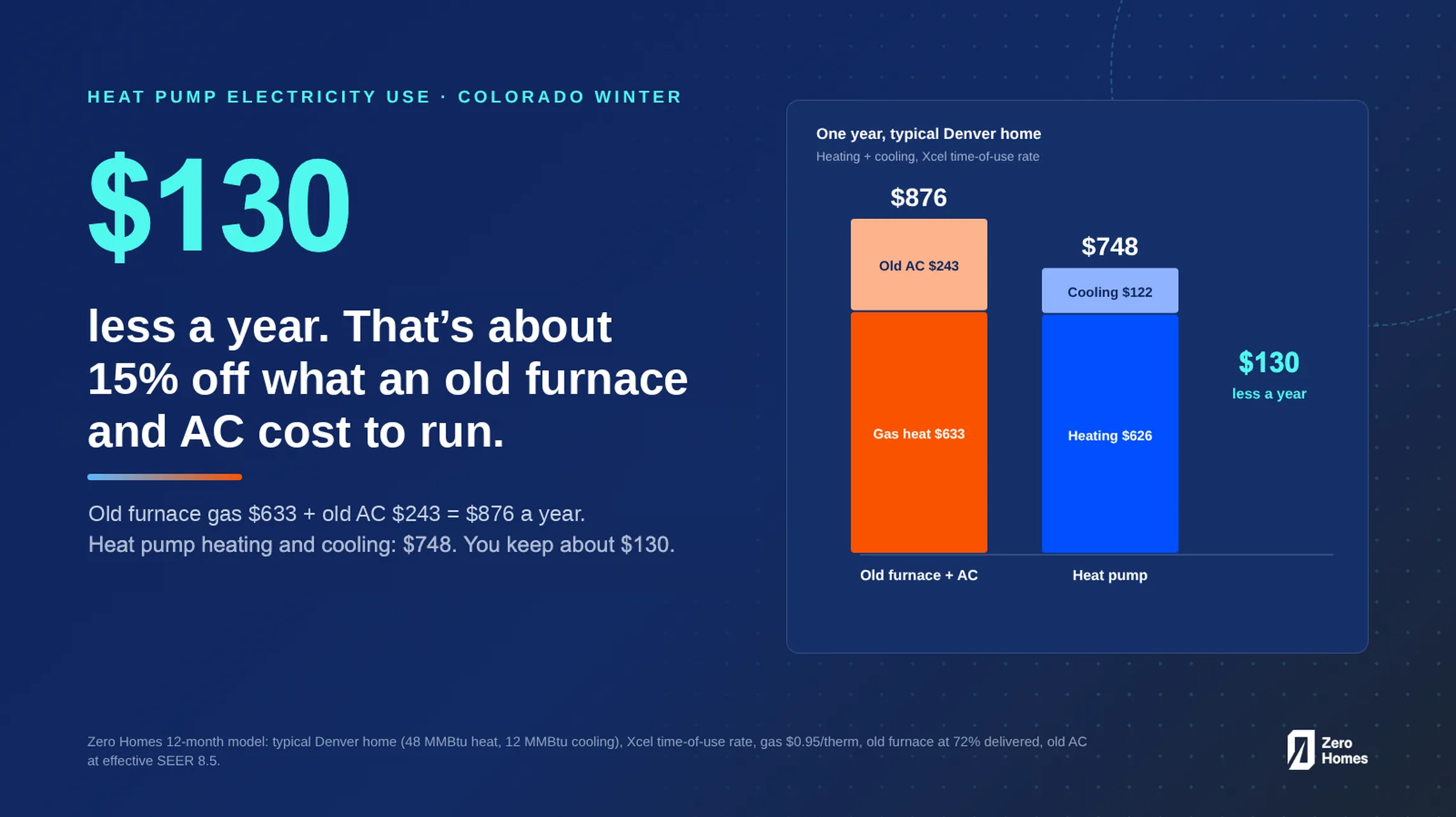
How much electricity does a heat pump use? A cold climate heat pump heating a typical Denver home uses about 4,900 kWh a year, with December and January each running about 1,030 kWh, or 33 kWh a day. On Xcel Energy's default time-of-use rate that's about $130 a month in the two coldest months and about $625 for the whole heating season.
The better question is what happens to your total bill. Your electric bill goes up and your gas bill goes down, and over a full year a typical Denver home spends about $750 to heat and cool with a heat pump, against about $880 for a 15-to-20-year-old furnace and air conditioner, about 15% less. Winter costs about the same either way; summer cooling costs about half. Your own number depends on your house, which the quote shows against your actual Xcel bills.
Key takeaways
Heating electricity for a typical Denver home: about 4,900 kWh a year, 33 kWh a day in December and January, under 10 kWh a day in October and April, zero from June through August.
Over 12 months, heating and cooling cost about $130 (about 15%) less with a heat pump than with an aging furnace and air conditioner on Xcel's time-of-use rate.
A heat pump uses about one third of the electricity that baseboards, space heaters or an electric furnace would for the same house, because it delivers 2 to 4 units of heat per kWh instead of 1.
Heat pumps run mostly off-peak, so the blended price is about $0.128 per kWh, not the on-peak $0.23.
Higher winter usage is the system doing its job. December, at a 30°F average, uses about three times the electricity of April at 48°F.
How much electricity does a heat pump use each month?
The chart is a typical Front Range home that needs about 48 million Btu of heat a year (the heat an 80% furnace burning 600 therms delivers), heated by a cold climate heat pump with monthly efficiency taken from its COP curve at Denver's normal monthly temperature and derated 10% for defrost cycles and cold snaps.
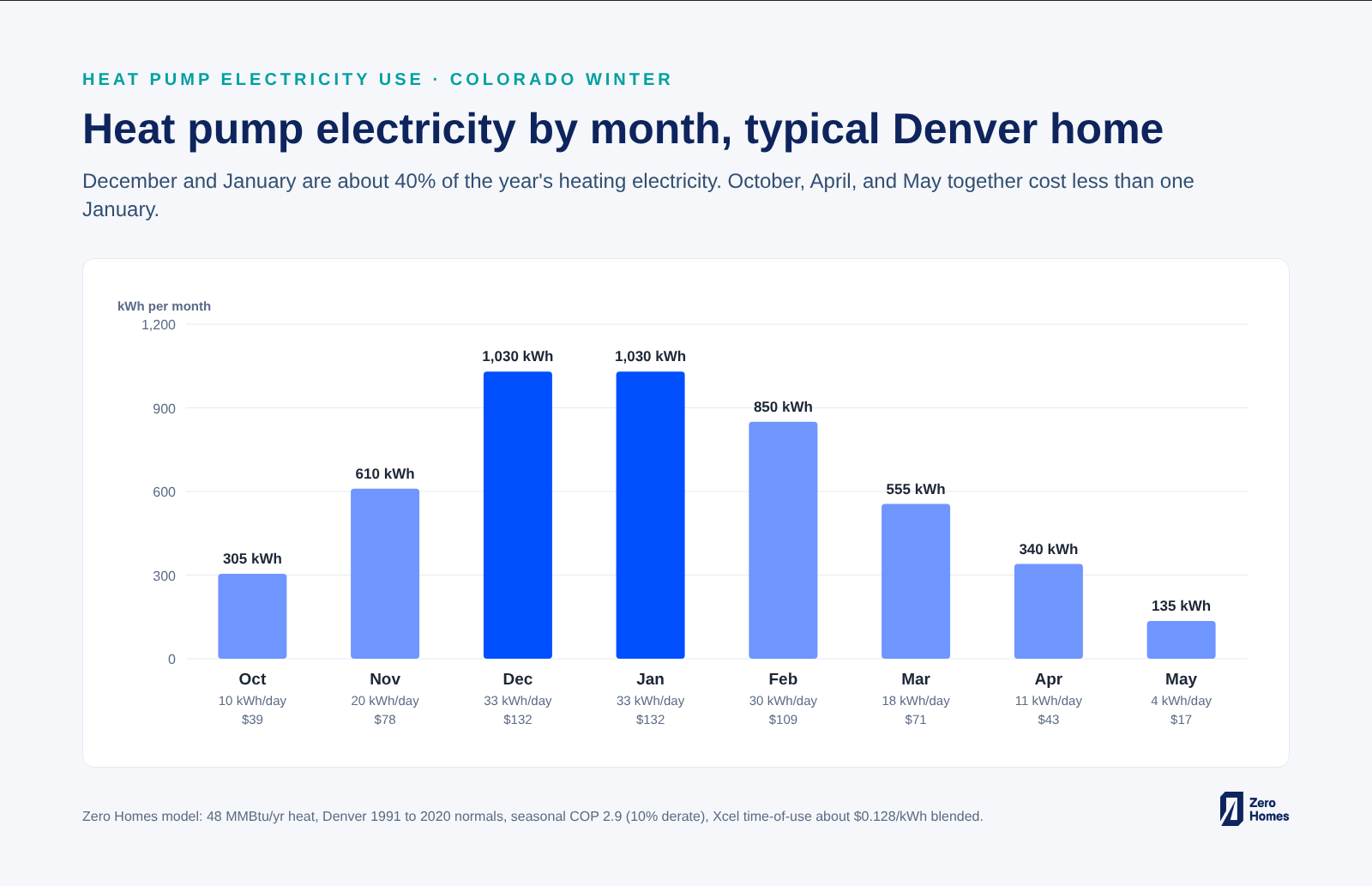
Sources: Denver 1991 to 2020 monthly normals; Colorado PUC, Xcel time-of-use rates; COP curve from the DOE Energy Saver heat pump page and NEEP cold-climate data, detailed in heat pump COP by temperature.
December and January together are about 40% of the year's heating electricity, because they combine the most heating hours with the lowest COP. The shoulder months are cheap: October, April and May together cost less than one January. Across the whole heating season that's about 4,900 kWh and about $625.
What will my total energy bill look like with a heat pump?
Lower over the year. Heating moves from your gas bill to your electric bill, and the heat pump also replaces your air conditioner, which is where most of the savings come from.
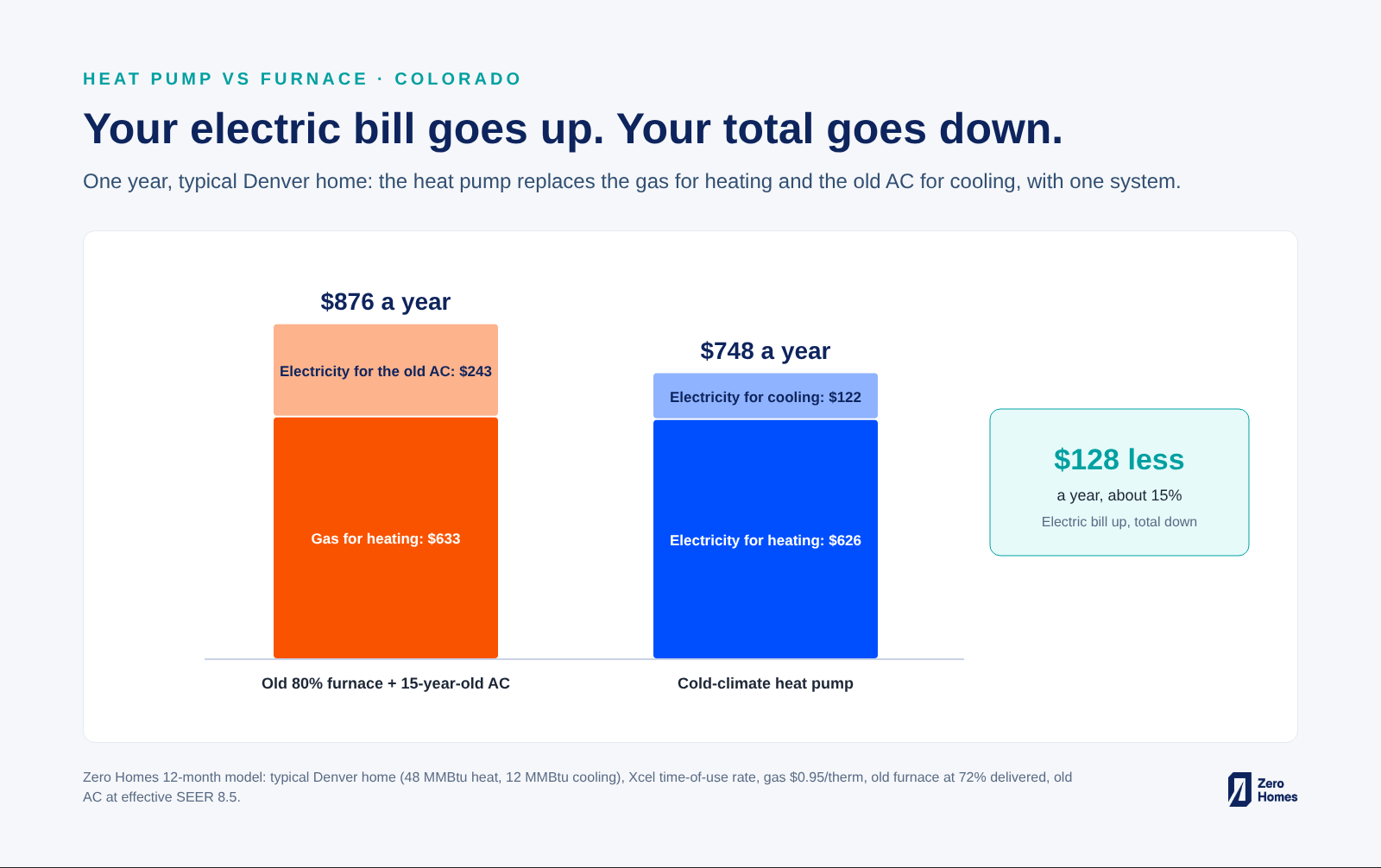
| Bill line, 12 months | Old furnace + AC | Heat pump |
|---|---|---|
| Heating | About $635 in gas | About $625 in electricity |
| Cooling | About $240 | About $120 (about half) |
| Total | About $880 | About $750 (about 15% less) |
In the coldest stretch, December through February, an older gas furnace costs a little less to run; the heat pump pulls ahead from March through November and finishes the year about $130 (about 15%) ahead. Two things widen the gap: a smart thermostat that pre-heats before Xcel's 5 to 9 p.m. peak, and dropping gas service entirely if you also electrify the water heater and range, which saves Xcel's $11 monthly gas service charge. The month-by-month comparison and those scenarios are in heat pump vs furnace: what each costs to run in Colorado. If the upfront cost is the hurdle, $0-down on-bill financing through CEF spreads it over your utility bill.
Will my heat pump keep the house warm on the coldest days?
Yes, when it's a cold climate unit sized to your house. The 33 kWh a day in January isn't a sign of strain; it's what keeping a house at 68°F costs when the outdoor average is 30°F. Cold climate units keep heating to -13°F or below, and DOE field tests in 22 homes measured them still delivering 1.5 units of heat per unit of electricity at -15°F. The field data is in do heat pumps work in cold weather?
What decides comfort on the coldest night is sizing: the unit's capacity at your county's design temperature (3°F in Denver) against your home's heat loss. We run that load calculation from a scan of your house and put the capacity line on the quote. How it works is in what size heat pump do I need?
How does a heat pump compare to other ways to heat?
Against anything else electric, it uses a fraction of the power. Against gas, compare the whole bill, not the kWh.
| Heating the same home for a season | Energy used | Cost |
|---|---|---|
| Cold climate heat pump | 4,880 kWh | About $625 |
| Electric resistance (baseboard, electric furnace) | About 14,070 kWh | About $1,800 (heat pump about 65% less) |
| Propane furnace, 80% ($2.50 a gallon) | About 655 gallons | About $1,640 (heat pump about 62% less) |
| Gas furnace, 15 to 20 years old, about 72% delivered ($0.95 a therm) | About 667 therms | About $635 (about even) |
Against electric resistance the heat pump cuts heating electricity by about two thirds (about 65%), and against propane it cuts heating cost by more than half (about 62%) at typical delivered prices. Against an older gas furnace the heating season is about even, and the heat pump wins the year because it also cools for about half the cost.
Should I keep my furnace as backup to use less electricity?
You can. A dual-fuel system pairs the heat pump with a gas furnace in good shape and lets the furnace carry December through February, when gas is cheapest relative to electricity. That takes the heat pump's three biggest months off your electric bill, cutting heating electricity from about 4,900 kWh to about 2,000 kWh. Over 12 months a dual-fuel home runs about $676 against about $813 for an 80% furnace and 15-year-old air conditioner, about 17% less. It fits best when your furnace still has years left, or in mountain homes with regular -20°F nights. The trade-offs are in is a dual-fuel heat pump worth it in Colorado?
What makes a heat pump use more or less electricity?
| What moves it | Pushes usage up | Pushes usage down |
|---|---|---|
| The house | Bigger, older, leakier | Smaller, tighter, newer windows |
| The weather | A cold January, up to 20% more | A mild winter, up to 20% less |
| The equipment | A unit running near maximum output | Full capacity at 5°F (DOE Challenge class) |
| The setpoint | Above 68°F, deep overnight setbacks | A steady setpoint, pre-heating before 5 p.m. |
The rate plan changes the price, not the kWh. Xcel's time-of-use rate charges about $0.23 per kWh from 5 to 9 p.m. on weekdays and about $0.11 the rest of the time. A heat pump heats around the clock, so only about 12% of its runs land in the expensive window without any effort, and a smart thermostat that pre-heats before 5 p.m. pushes that lower. What qualifies as cold-climate equipment is in what is a cold climate heat pump.
What this won't tell you
Your number. The chart is a typical house. The quote shows yours, from a load calculation of your actual home, priced against your actual Xcel bills.
Next year's rates. Xcel has asked regulators for an electric increase of about 10% and a gas increase of about 11%; both move the comparison, in opposite directions.
Frequently asked questions
A new heat pump for $0 down, with every rebate found and filed for you. If you want your own month-by-month number instead of a typical one, we'll run it from a scan of your house against your actual Xcel bills and show you the net cost before anyone visits. See how it works.