
Guide
Heater not working: what to check, and when it's the system

Rich Jagisch
Director of Growth
5 minute read
11/17/2026
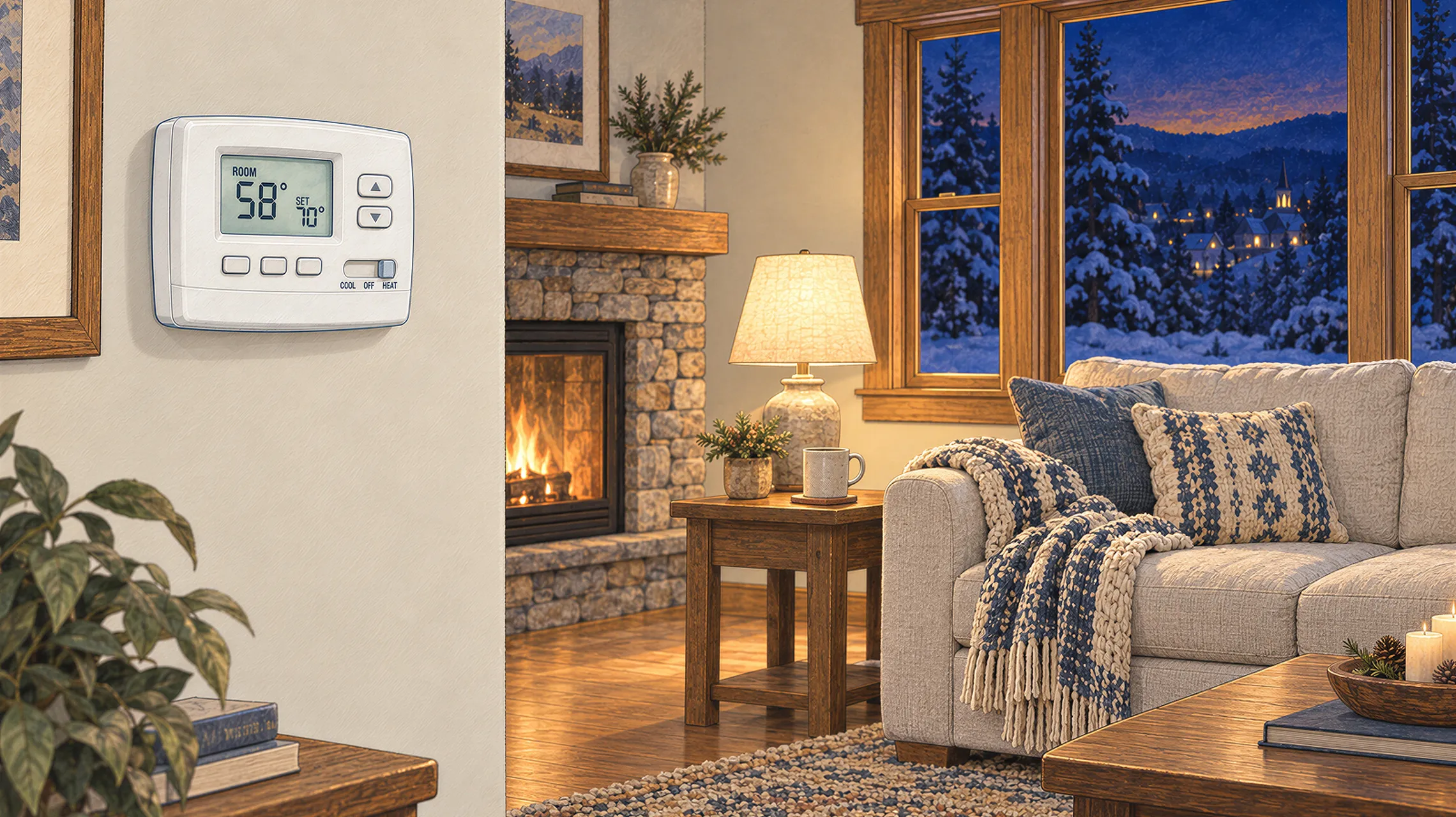
When the heater isn't working, the cause is usually one of four simple things. The thermostat is set wrong, the power is off, the filter is clogged or the gas isn't flowing. Check those first. They take ten minutes and cost almost nothing.
If the heater still isn't working, the next step is to describe what it's doing. "Not working" covers five different problems, and each has a different answer.
Here is the quick checklist, a guide to the symptoms, and how to tell a repair from the end of the system's life.
Key takeaways
Start with the thermostat, the power, the filter, the vents and the fuel.
Then name the symptom. No response, cold air, short bursts, water on the floor and uneven rooms all point to different causes.
Most heater repairs cost $125 to $500.
If you smell gas or a carbon monoxide alarm sounds, leave the house and call from outside.
A heater over 15 years old that needs frequent repairs is a candidate for replacement.
What should I check first when the heater isn't working?
Carrier's furnace checklist has five steps you can do yourself [1].
Thermostat. Confirm it has power, it's set to heat and the temperature is set above the room's reading. Replace the batteries if the screen is dim.
Power. Check that the furnace's power switch is on and its breaker hasn't tripped.
Filter. Replace it if it's dirty.
Vents. Make sure the supply and return vents are open and clear.
Fuel. For a gas furnace, check that the gas valve is open. The handle should be parallel to the pipe.
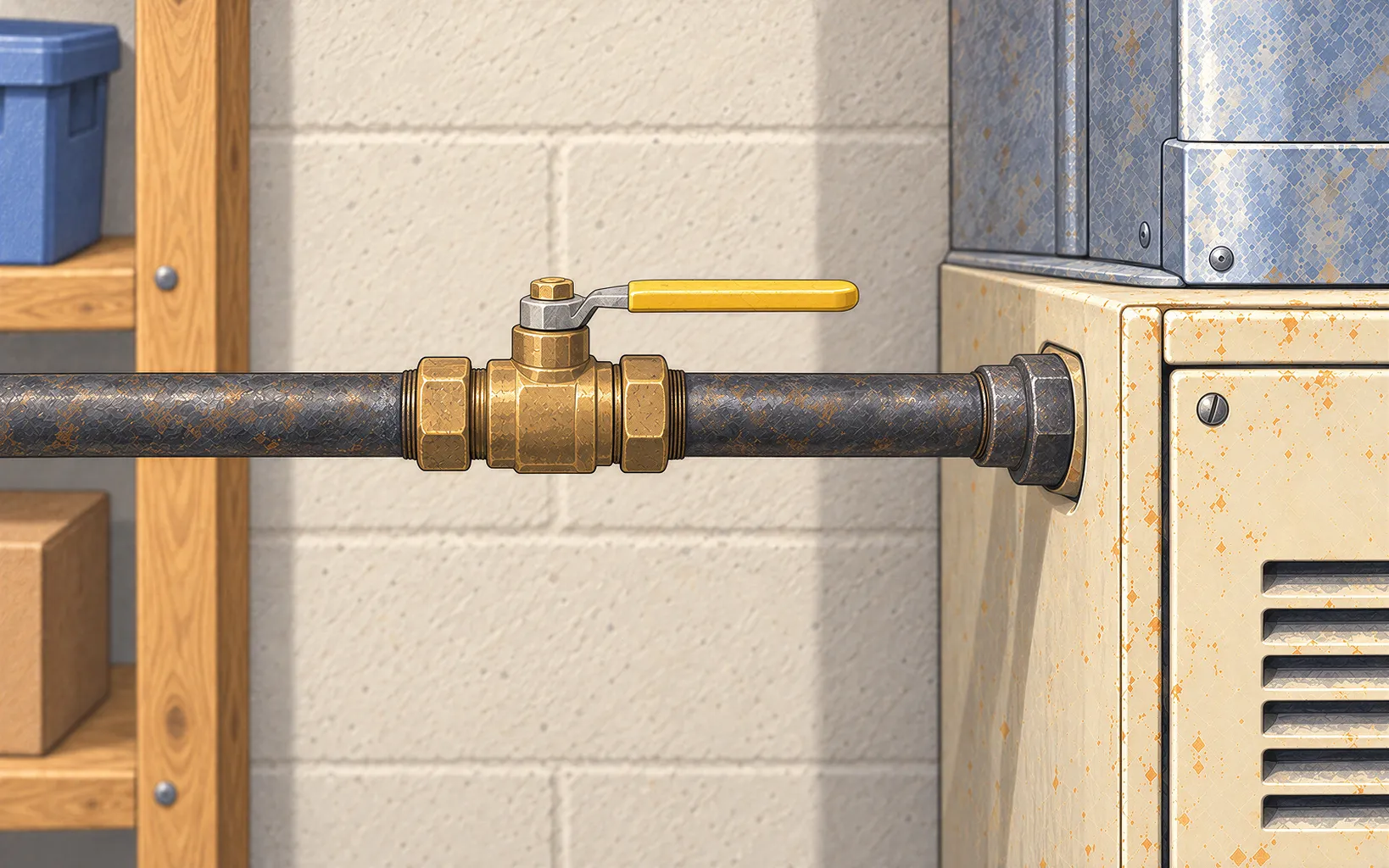
One caution comes before all of these. If you smell gas, don't touch any switches and don't try to relight the furnace. Leave the house and call your gas utility or emergency services from a safe place [1].
What is the heater actually doing?
If the checklist didn't bring the heat back, match what you see to the table.
| What you notice | What it usually means | Where to read more |
|---|---|---|
| Nothing happens at all | A power, thermostat or ignition problem | Furnace not turning on |
| The fan runs but the air is cold | The burners aren't staying lit | Furnace blowing cold air |
| It starts, runs a few minutes and stops | Overheating, a dirty sensor or a furnace that's too big | Furnace short cycling |
| Water on the floor near the furnace | A blocked drain, usually | Furnace leaking water |
| Some rooms are warm and others are cold | Ducts or sizing, not a broken part | Hot upstairs, cold downstairs |
The first four are things a technician repairs. The fifth isn't. A heater that works but leaves half the house cold hasn't failed. It was never matched to the house.
Carrier also lists the warning signs that call for a professional straight away: unusual noises, repeated shutdowns, burning smells and error codes [1].
What will a heater repair cost?
Most repairs cost between $125 and $500 [2] [3]. That covers the visit and a common part.
A few repairs cost far more. A blower motor or a heat exchanger can run from $300 to $3,000 [2]. Those are the bills that deserve a second look, especially on an older heater.
We break the prices down part by part in furnace repair cost: what's normal, and what's a signal.
When is it the system and not the part?
Three signs matter more than any single repair.
Age. A gas furnace typically lasts 15 to 20 years [4]. ENERGY STAR suggests considering replacement once a furnace or boiler is more than 15 years old [5].
Frequency. ENERGY STAR lists equipment that needs frequent repairs among its signs that it's time to replace [5]. One repair is maintenance. Three in two winters is a pattern.
Comfort. The same list includes rooms that are too hot or too cold [5]. If the house was uneven before the heater broke, a repair will restore the unevenness along with the heat.
Any one of these, alone, is worth noting. Two together make the case for pricing a replacement before you pay for the repair. We go through the decision in should I repair or replace my furnace?
What if it turns out to be the heat exchanger?
This is the diagnosis that worries people most, and with reason. The heat exchanger keeps the exhaust from the flame apart from the air you breathe. A crack can let combustion gases, including carbon monoxide, into the house [6].
A technician who finds one may shut the heater down on the spot. Replacing the part costs $1,000 to $3,000 [2]. On an older furnace that's rarely money well spent.
If you've been told this, read cracked heat exchanger: repair or replace? before you decide.
Where we fit in
A plain disclosure. Zero Homes doesn't repair heaters we didn't install. We replace aging systems, and we service the ones we put in.
So this guide isn't a pitch for a service call. It's meant to help you describe the problem, understand the quote and judge whether the repair is worth it.
Frequently asked questions
Sources
Carrier, "Heater not working? Try our furnace troubleshooting guide." https://www.carrier.com/us/en/residential/hvac-resources/furnaces/troubleshooting-a-furnace/
HomeGuide, "Furnace repair cost." https://homeguide.com/costs/furnace-repair-service-cost
Angi, "How much does the average furnace repair cost?" by Paige Bennett, updated August 23, 2024. https://www.angi.com/articles/how-much-does-common-furnace-repair-cost.htm
Lennox, "How long does a furnace last?" https://www.lennox.com/residential/lennox-life/consumer/how-long-does-a-furnace-last
ENERGY STAR, "When is it time to replace?" https://www.energystar.gov/saveathome/heating-cooling/replace
Carrier, "Understanding heat exchangers," reviewed September 22, 2026. https://www.carrier.com/us/en/residential/hvac-resources/heat-exchanger/
Carrier, "Reasons your furnace is blowing cold air and how to fix them." https://www.carrier.com/us/en/residential/hvac-resources/furnaces/furnace-blowing-cold-air/
When the heater has needed one repair too many, it helps to see the alternative laid out. [See what replacing it looks like with Zero Homes](/services/furnace-replacement).